
The Transformative Wave: AI Ascending in The Entertainment Industry
Ryan F.
AI isn’t “coming to entertainment.” It’s already here—quietly rewriting scripts, cleaning up VFX, generating concept art, and speeding up post-production in ways most viewers never notice.
And that’s the part that matters: the biggest AI shift in Hollywood won’t be a robot actor on screen. It’ll be the invisible productivity layer behind the scenes that changes how fast content gets made, how much it costs, and who actually gets hired.
Where Is AI Showing Up First
AI adoption in entertainment is happening in the most practical places first—the parts of the workflow that are expensive, repetitive, or painfully slow.
- Script coverage: summarizing drafts, spotting pacing issues, finding inconsistencies
- Pre-visualization: concept art and scene planning before anything gets built
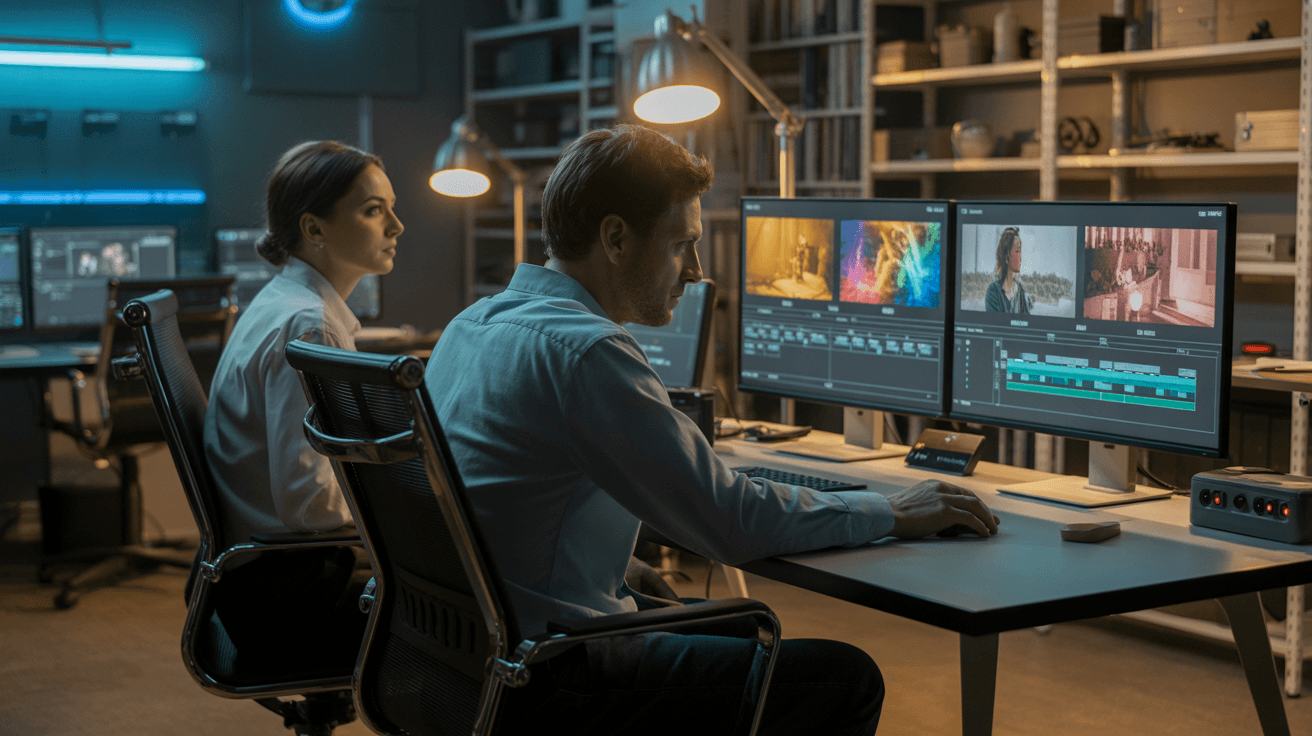
- Editing support: organizing footage, logging takes, generating rough cuts
- VFX cleanup: rotoscoping, compositing assistance, background enhancements
- Marketing production: trailers, thumbnails, localized variants, A/B creative testing
The real shift:
AI is turning parts of filmmaking into something closer to software development: iterate faster, test more ideas, ship versions quicker.
Studios Want Speed, Not Just “Innovation”
Here’s the ugly truth about entertainment economics: most projects don’t fail because they’re creatively bad. They fail because they’re too expensive, too slow, and too risky.
AI helps reduce that risk by making the early stages cheaper. You can explore more story options, generate more variations, and validate concepts faster before a studio burns millions on production.
If you want a credible, research-based look at AI’s broader impact on work and productivity, the OECD’s AI hub gives a grounded overview without the hype tone.
What This Means for Creators
For writers, editors, and artists, the feelings are mixed—and honestly, they should be. There’s opportunity here, but also real displacement risk.
In my experience watching how these shifts play out, the winners are rarely “the people who refuse it” or “the people who worship it.” The winners are the ones who treat AI like a tool that speeds up the boring parts so the creative brainpower goes where it matters.
- Writers: faster outlining, better revisions, more structural experimentation
- Editors: quicker rough cuts, better organization, fewer mind-numbing tasks
- Artists: concept exploration and style direction at higher speed
- Producers: more clarity earlier on what’s feasible and what’s risky
The Most Controversial Part: Ownership and Consent
This is where things get messy fast: training data, likeness rights, and credit.
If AI is trained on a writer’s work, should that writer be paid? If an actor’s face can be replicated, who owns that performance? If a song can be generated “in the style of” someone, where do we draw the line?
These aren’t abstract questions. They’re already shaping policy, contracts, and lawsuits. The biggest long-term issue in entertainment AI might not be technical—it might be legal.
For a more structured view on AI policy and ethics work, NIST’s AI Risk Management Framework is one of the best high-level references right now.
What most people miss:
The biggest fight won’t be “AI vs creativity.” It’ll be permission, compensation, and control over creative assets.
How AI Changes the Streaming Arms Race
Streaming platforms have one constant pressure: they need fresh content, constantly, without spending like it’s 2021.
AI is going to accelerate the “content engine” in a few obvious ways:
- more rapid testing of show concepts
- faster localization (subs/dubs/marketing) across markets
- cheaper post-production on mid-budget projects
- more personalized recommendations and promotional targeting
It also means platforms could flood the market with more content than ever—which sounds great until you realize it makes discovery even harder.
AI Will Also Change Audience Trust
One underrated consequence: audiences are going to become more suspicious.
If deepfakes get better and AI-generated scenes become common, viewers will start asking questions that didn’t matter before:
- Was this actor actually in this scene?
- Did a human write this dialogue?
- Is this trailer misleading because it’s AI-cut for hype?
And when trust gets shaky, you usually see one of two things happen: stronger labeling rules, or stronger backlash.
Quick Breakdown: Benefits vs Risks
If you want the cleanest picture, here it is:
FAQ
Is AI replacing writers and actors?
Not completely, but it is reshaping the workflow. AI will replace some repetitive tasks and may reduce demand for certain roles, while increasing demand for people who can manage, supervise, and refine AI-assisted production.
Will AI-generated movies become common?
AI-generated elements already are. Fully AI-generated films may show up more often, but high-end entertainment still relies heavily on human creative leadership and talent.
How are streaming platforms using AI right now?
They use it for recommendations, audience targeting, marketing optimization, and increasingly for production-side efficiency like localization and post-production assistance.
What’s the biggest risk with AI in entertainment?
Consent and rights. The legal and ethical framework around training data, likeness use, and compensation is still catching up.
What can creators do to stay competitive?
Learn where AI speeds up the boring parts of your work, keep your creative voice sharp, and make sure you understand the rights and contracts around your content and likeness.
Key Takeaways
- ✓ AI is already changing entertainment through script, editing, VFX, and marketing workflows.
- ✓ Studios care most about speed, cost control, and reducing production risk.
- ✓ Consent, ownership, and compensation are the biggest long-term battles.
- ✓ AI will accelerate streaming production, but may increase content overload.
- ✓ Audience trust will become a bigger issue as synthetic media becomes harder to spot.
- ✓ Creators who adapt and supervise AI tools will have an advantage over those who ignore them.
 Entertainment
 The Evolution of Social Media: A Journey through Time
Written by: Ryan F. Entertainment Editor & Streaming Industry Analyst I cover th...
 Fashion
 Mastering the Art of Minimalist Dressing with a Capsule Wardrobe
Written by: Jasmine L. Fashion Blogger & Pop-Culture Trend Watcher I write about...