
Exploring the Future of Augmented Reality and Apple's Vision Pro
David K.
Apple’s Vision Pro isn’t “just another headset.” It’s Apple planting a flag for what they want the next era of computing to look like—one where your screen isn’t a rectangle on your desk, but the room around you.
And whether you’re excited, skeptical, or somewhere in between, here’s the useful part: augmented reality is moving from novelty to infrastructure. Vision Pro is basically a preview of that shift.
Apple’s Vision Pro: The Framework for Spatial Computing
Most people talk about Vision Pro like it’s a premium VR device. That’s not wrong… but it’s also not the full picture.
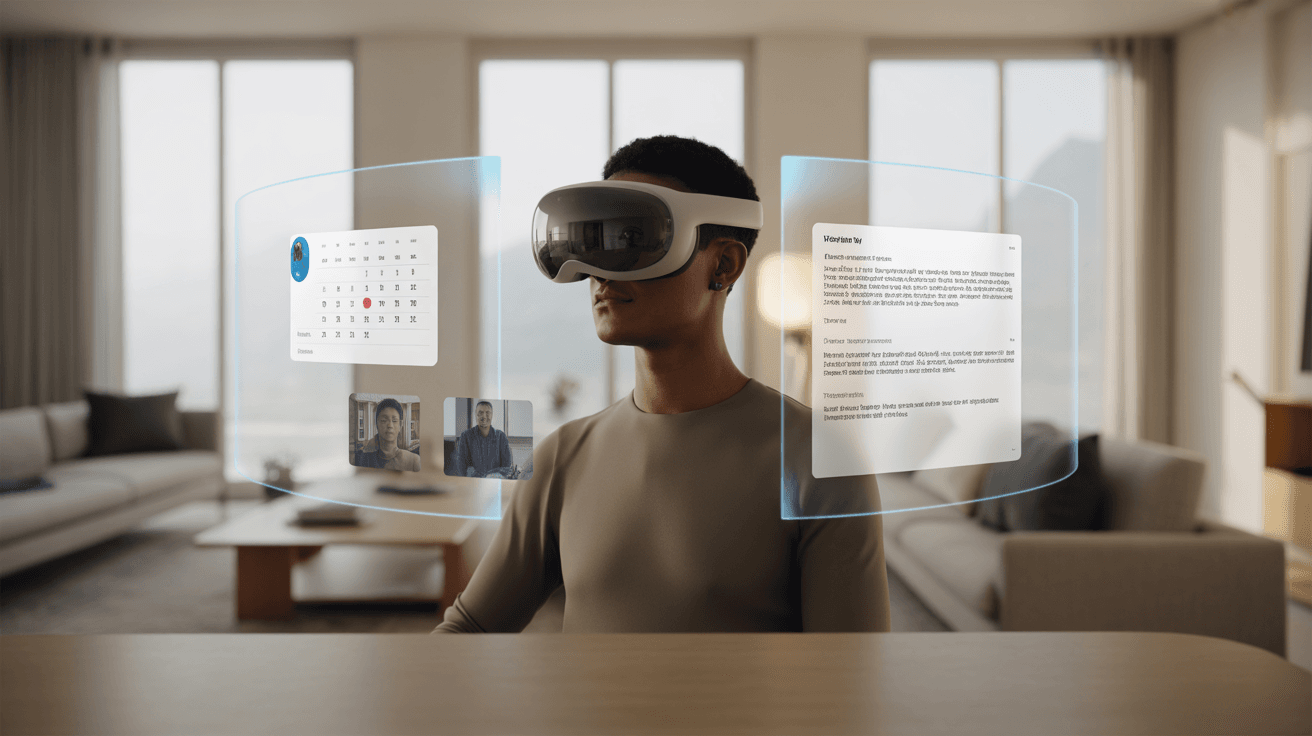
What Apple is really pushing is spatial computing—a system where apps and information live in your physical space, anchored to real surfaces, rooms, and objects. The hardware is impressive, sure, but the bigger story is the software layer: visionOS.
In my view, that’s where the long-term value sits. Apple isn’t just selling a product, they’re building an ecosystem developers can build on for the next decade.
What’s Actually New Here and Why It Matters
AR has existed for years. We’ve all seen the same recycled demos: virtual furniture in your living room, cartoon characters on your table, floating text on a phone camera feed.
Vision Pro is different because it’s designed to make AR feel like a native way to work and interact, not a gimmick. That’s largely thanks to machine learning and computer vision doing the heavy lifting in the background.
If you want a clean definition of what “augmented reality” actually is (and how it’s different from VR), Britannica’s overview is a solid reference.
Quick insight:
The big win isn’t “cool visuals.” It’s context-aware computing—apps that understand your environment well enough to behave like they belong there.
Where Vision Pro Fits in Real Work
Let’s be honest: nobody drops this kind of money just to watch floating Netflix once. The reason businesses and serious users care is because spatial computing can solve problems that flat screens can’t.
- Training & simulation: safer practice for high-risk jobs (medical, industrial, aviation)
- 3D visualization: models, architecture mockups, prototypes you can “walk around”
- Remote collaboration: shared spatial workspaces where people can point, build, and review together
- Education: interactive learning that sticks (especially for complex topics)
A good example of how AR is already showing value in healthcare is how it’s being explored for training and visualization. If you want a more research-backed angle, you can browse AR-related publications through PubMed and see how quickly medical use cases are growing.
The Practical Reality Check
Here’s what I think gets overlooked in the excitement: hardware doesn’t drive adoption — habits do.
For AR to stick, it needs to feel as natural as pulling out your phone. That means:
- comfort for long sessions
- apps that solve real problems (not just “look at this demo”)
- social acceptance (yes, it matters)
- a price point that doesn’t scare off normal users
Even if Vision Pro itself stays premium, the roadmap it sets up matters. Apple tends to start expensive, learn fast, and then scale down to something mainstream.
The Big Shifts Behind the AR Wave
This is where the bigger picture comes together. AR isn’t about replacing phones tomorrow—it’s about gradually shifting how we think about screens, workspaces, and interaction.
So What Is Apple’s Vision Pro Exactly?
What is Apple’s Vision Pro exactly?
It’s a spatial computing headset and framework that uses computer vision and machine learning to anchor digital content to your physical environment with high precision—so apps can “sit” in your space instead of being trapped inside a phone or laptop screen.
Where This Goes Next
If Apple keeps investing, Vision Pro’s influence won’t be limited to this one device. The ripple effect is bigger:
- more developers building “spatial-first” apps instead of mobile-first
- workflows shifting from multiple monitors to flexible virtual workspaces
- AR getting baked into everyday tools (email, docs, video calls) instead of standalone apps
The timeline is the big question. Wide adoption may take longer than people think, but the direction feels locked in.
FAQ
Is Apple Vision Pro the same thing as VR?
Not exactly. It can do immersive experiences like VR, but Apple is positioning it more as “spatial computing,” where digital windows and objects blend into your real environment.
What’s the difference between augmented reality and virtual reality?
AR overlays digital content onto the real world, while VR replaces your environment entirely with a virtual one. AR keeps you grounded in the real world; VR pulls you out of it.
Is Vision Pro worth buying right now?
If you’re a developer, early adopter, or someone with a real workflow use case (3D design, training, spatial collaboration), it can be worth exploring. For casual users, it’s still a first-gen product with a premium price.
Which industries will benefit from AR the fastest?
Healthcare, education, and technical training tend to see the quickest impact because AR helps people learn by doing—and reduces costly mistakes.
Will AR replace phones and laptops?
Eventually it could reduce reliance on traditional screens, but it won’t happen overnight. The more realistic near-term future is hybrid: phones/laptops stay, but spatial devices add new ways to work and interact.
Key Takeaways
- ✓ Vision Pro is less about “VR entertainment” and more about building spatial computing as a platform.
- ✓ The real long-term value lives in visionOS and what developers create on top of it.
- ✓ AR becomes powerful when apps understand your environment, not when they just overlay graphics.
- ✓ Healthcare, education, and training are likely to see the fastest real-world ROI from spatial tools.
- ✓ Mainstream adoption depends on comfort, price, and genuinely useful everyday apps.
- ✓ If Apple’s pattern holds, today’s premium hardware is tomorrow’s mainstream category.
 Tech
Tech AI and the Race for Green Tech: The Solution to Energy Crisis?
Written by: David K. Tech Strategy Consultant & Workflow Automation Specialist ...
 Entertainment
 The Evolution of Social Media: A Journey through Time
Written by: Ryan F. Entertainment Editor & Streaming Industry Analyst I cover th...